
How to Search Civil Dockets
The Effingham County CM Web Search indexes Superior and State Court matters. Pick SU or ST, then search by Party, Associated Party, or Case Number. Set Case Type to CIVIL. The portal offers no Magistrate code. So a small claim, dispossessory, garnishment, or similar Magistrate matter needs a separate office route.
Search with the exact filed name or case number when you can. If nothing comes back, test the other court. Drop a narrow date range, and try a spelling variant. The Clerk's civil and criminal line is 912-754-2146. You will find the Clerk at 700 N Pine Street, Suite 110, Springfield. Magistrate Court sits in Suite 250 and answers at 912-754-2124.
- Identify Superior, State, or Magistrate Court.
- For SU or ST, choose the matching CM Web Search form.
- Enter a filed name or the court, division, year, and six-digit sequence.
- Open the result and review Proceedings, status, and image indicators.
- Ask the proper clerk for an unavailable image or certified copy.
The official civil Case Number screen shows the local search fields.
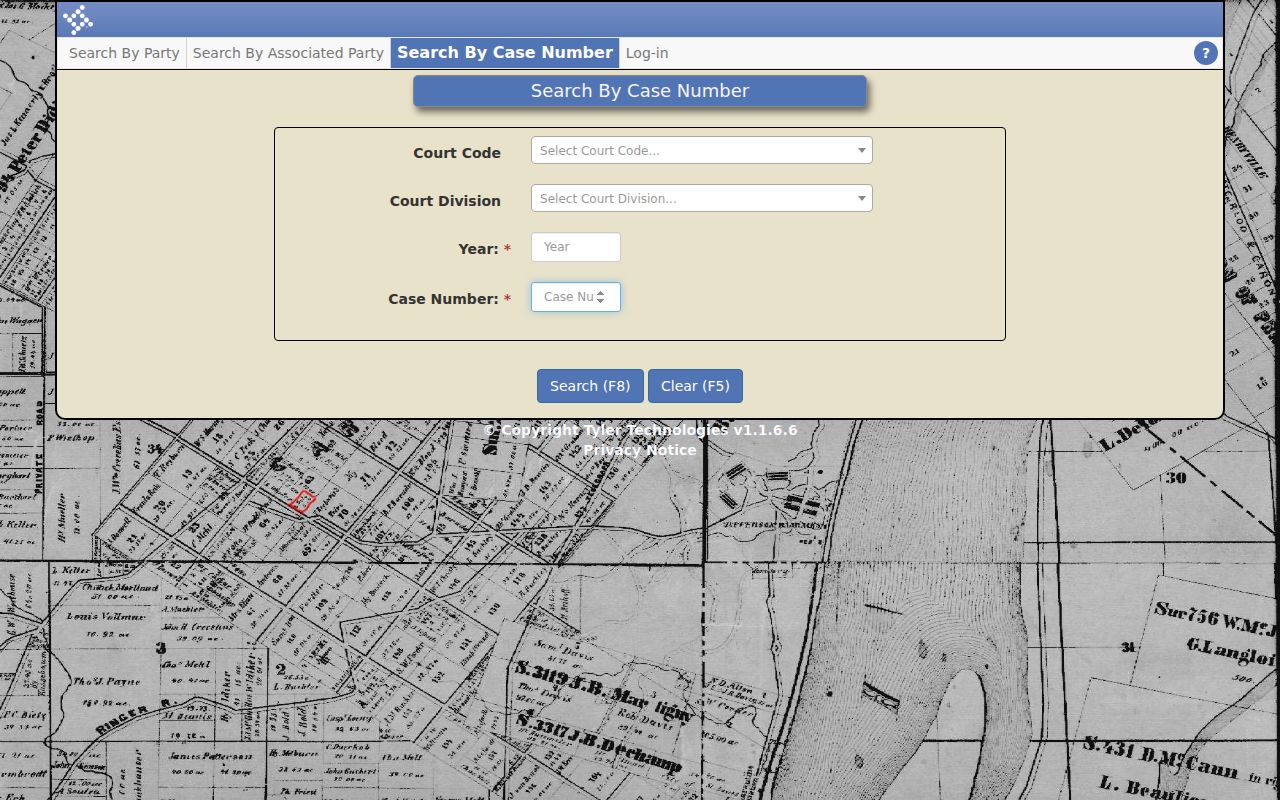
The form breaks a case into court code, dynamic division, year, sequence, civil case type, and status. Each field can narrow away a valid docket result.
Effingham County Civil Jurisdiction
Effingham County's three civil courts overlap by subject and remedy, but their access routes differ. Superior Court holds broad civil power and handles divorce. State Court hears county civil disputes not reserved to Superior Court. Magistrate Court takes claims generally up to $15,000. It also handles dispossessory, garnishment, Trover, and other listed processes.
| Court | Civil work | Starting route |
|---|---|---|
| Superior | Broad civil cases and divorce | CM Web Search SU |
| State | County civil disputes | CM Web Search ST |
| Magistrate | Small claims and named summary proceedings | Magistrate office or eFile Georgia |
| Probate | Estates, guardianships, and related matters | Appointment-only Probate office |
An empty ST or SU result does not rule out a Magistrate or Probate case. It simply reports what that Effingham County index route returns.
What a Civil Docket Shows
The public portal shows which search fields the courts expose, while the State Court procedure page names the documents and events that shape a civil record. A docket entry proves a filing happened. It does not always show what the entry means. Treat search fields and filing concepts as separate things, and confirm both against the court's own materials before drawing conclusions about a case record.
| Case identity | ST or SU, dynamic division, filing year, and six-digit sequence. |
|---|---|
| Case type | CIVIL in the portal search. |
| Party | A person or organization indexed in the action. |
| Proceedings | Dated filings or court events and possible image indicators. |
| Status | ACTIVE or INACTIVE, not a substitute for an order. |
| Local filing concepts | Motions, proposed orders, certificates of service, defaults, dismissals, and Final Disposition Forms. |
Read the underlying order before calling anything a ruling. A motion is only a request. A proposed order still awaits judicial action. And a Final Disposition Form reports a resolution, but it never replaces the judgment itself.
Effingham County Civil Procedures
The Effingham State Court procedure page gives local signals that help decode docket entries.
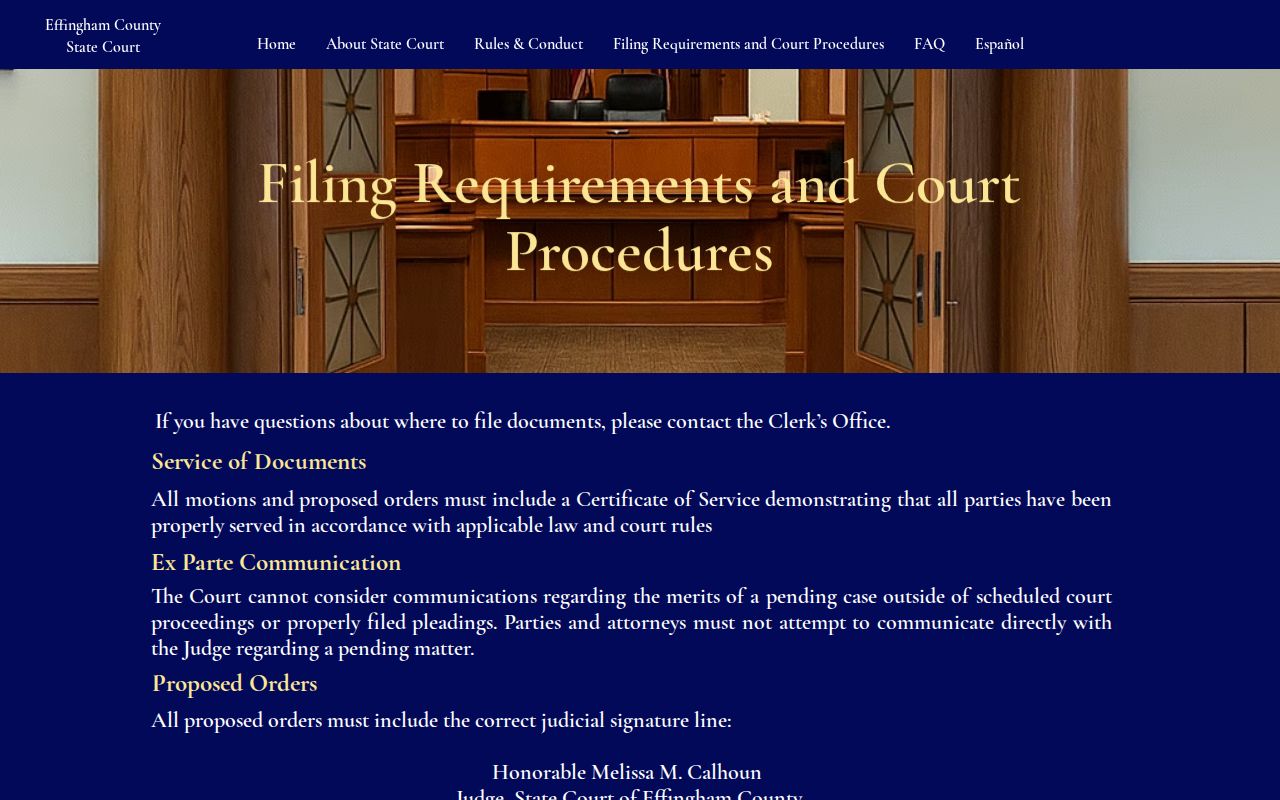
It covers certificates of service, proposed orders, final disposition forms, summary-judgment hearings, defaults, dismissals, and continuances. A calendar entry for a motion is not an entered ruling.
- Certificate of service
- Proof that required parties received the filing.
- Proposed order
- Text submitted for judicial review, not yet a signed order.
- Default judgment
- A judgment that requires the supporting procedure and documents identified by the court.
- Final Disposition Form
- A reporting form required for listed final outcomes.
Types of Civil Cases on the Docket
The claim type points to the right civil docket. Superior Court supplies the broad route, including divorce. State Court handles civil disputes within its county jurisdiction, and Magistrate Court's official materials name several specific civil categories plus a general claim limit.
- Civil suits and small claims in Magistrate Court.
- Dispossessory proceedings.
- Garnishment and post-judgment interrogatories.
- Trover and personal-property foreclosure.
- Broad civil and divorce matters in Superior Court.
The July 2024 Magistrate schedule also lists FiFa, abandoned vehicles, service, and subpoena categories. Those labels name a process, not proof that a case exists.
Effingham County Civil Fees
The fee numbers do not agree, so read them carefully. The county FAQ states $210. It adds $50 Sheriff service for each defendant in a civil filing. A dated 2020 Clerk schedule lists $209 plus applicable service. The July 2024 Magistrate schedule lists separate amounts. It shows $105 for a civil suit, $80 for a dispossessory summons, and $105 for Trover or garnishment, with service fees extra.
| Source | Published item | Use |
|---|---|---|
| County FAQ | $210 plus $50 per defendant service | Verify with filing clerk |
| 2020 Clerk schedule | $209 plus service | Dated reference only |
| July 2024 Magistrate schedule | Separate category amounts | Confirm current Magistrate total |
Do not merge these figures. Ask the actual filing court for its current filing, service, copy, and certification charges.
Settings and Hearings on Civil Dockets
A civil docket can list a motion hearing, summary-judgment hearing, trial setting, continuance, or final event. Confirm the date through the assigned court. A filing date is not a hearing date. State Court's civil assistant answers at 912-754-2119. Continuances and cancellations require prior judge approval.
A request moves nothing until the court acts. Read the latest notice or order and compare it with the newest proceeding entry. The Effingham County court calendar process explains why the Clerk calendar, the county event calendar, and a case-specific notice each carry different authority.
Effingham County Civil E-Filing
Georgia's official eFile directory lists the provider choices and Effingham entries.
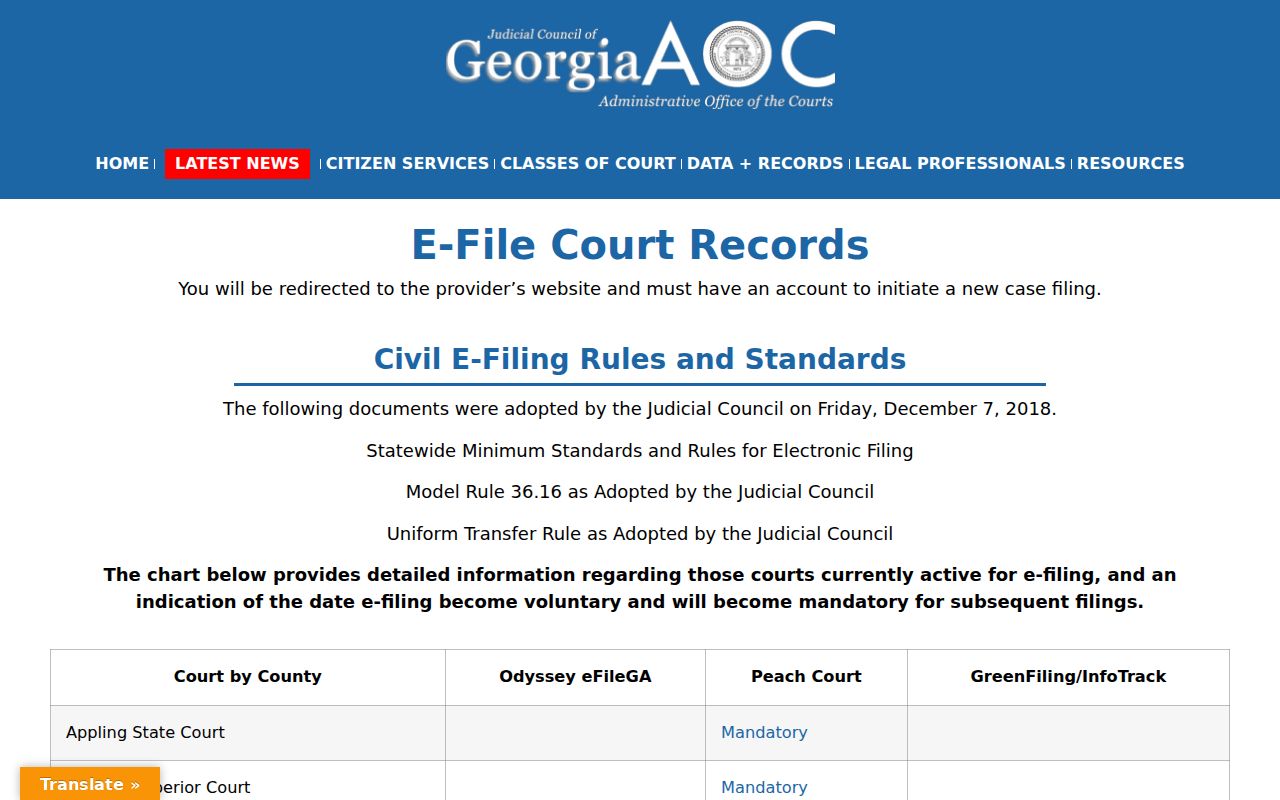
Effingham State and Superior rows list eFileGA and PeachCourt as mandatory providers, with GreenFiling or InfoTrack available. E-filing submits documents. It does not search the public docket. The eFileGA landing page is an account-based filing route.
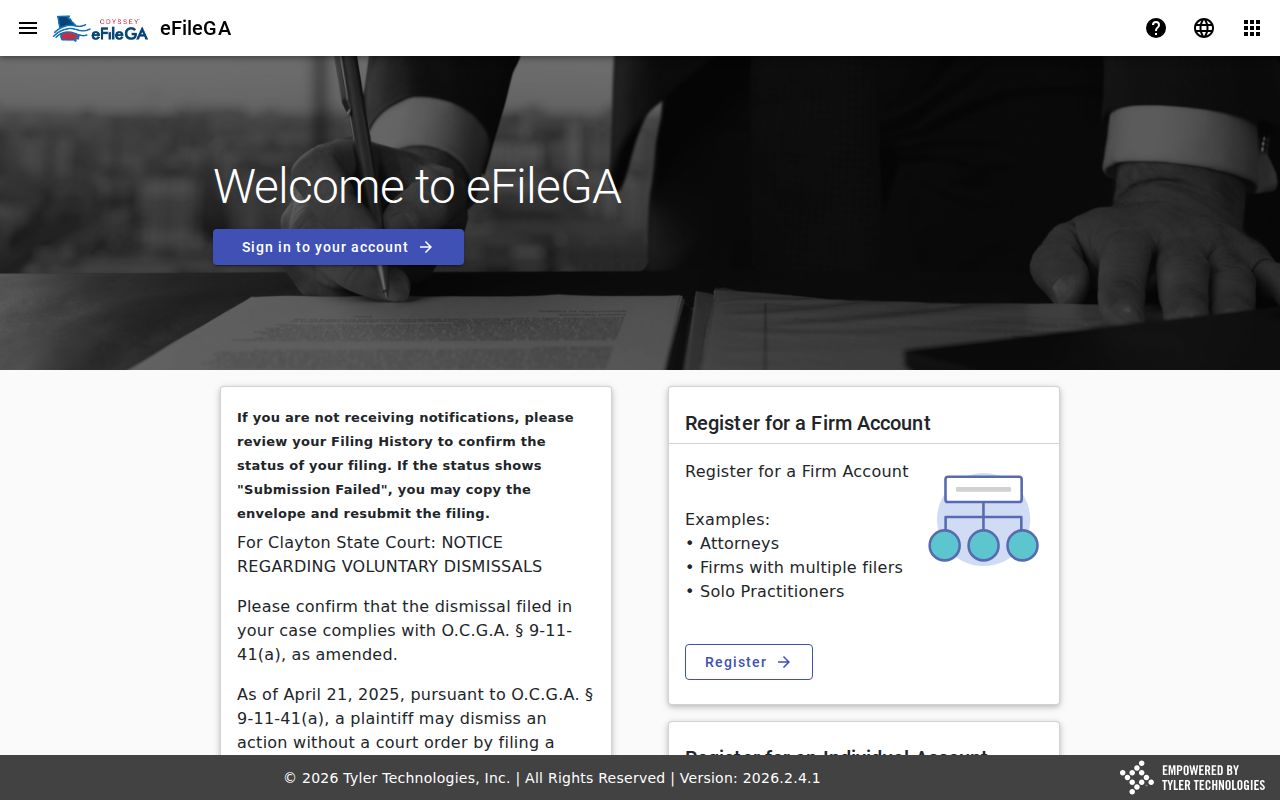
The login screen shows the transactional layer without exposing a public case result or filed party data.
Effingham County PeachCourt Route
PeachCourt is another provider named in Georgia's official routing for Effingham State and Superior filings.
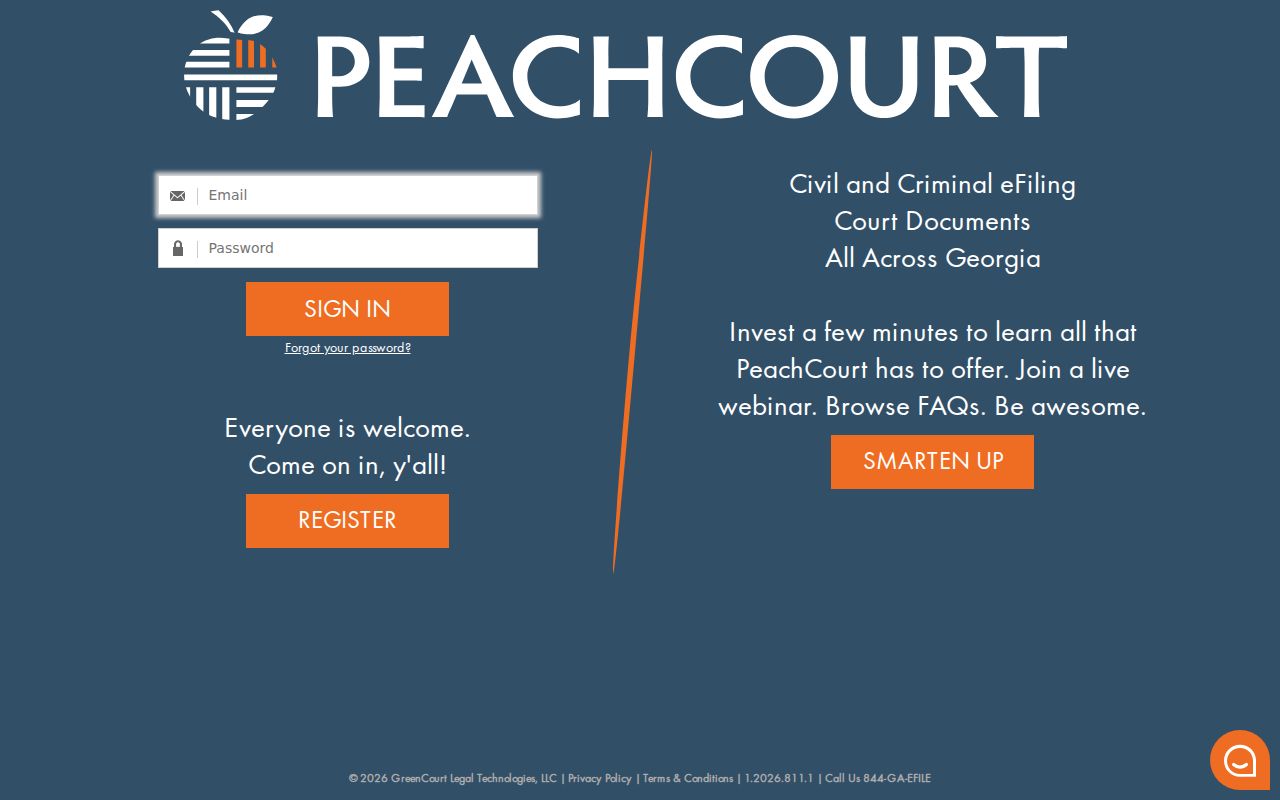
The landing screen offers login and registration for filing or document services. An account or vendor listing does not make a sealed filing public, and the provider should not replace Clerk confirmation of the official case history.
A filer uses the vendor to send a document. A reader uses the docket index to locate a case. A requester asks the Clerk for the official copy. Keeping those tasks separate stops a login screen from being mistaken for a complete civil docket search.
Effingham County Civil Appeals
Appealing a Magistrate judgment sends the case to Effingham County Superior Court under a fresh case number. That matters for docket search habits. Hunt only the old Magistrate number and you can miss the appellate docket entirely.
Deadlines differ, too. Ordinary civil appeals get one timeline, dispossessory appeals another, so rely on the official judgment and the clerk's current instructions for the exact date. Clerk staff will explain filing routes. They cannot give legal advice.
Effingham County Civil Images
CM Web Search splits its public index from actual document access. The Clerk's user guide walks through an approved account, a Proceedings view, image indicators, and a cart workflow. No current image charge is posted. Spot the entry by date and title first. Then ask the Clerk about viewing, ordering, and certification before you rely on any copy.
The Clerk's counter is the fallback whenever an online image will not load. Request the case history first. After that, name the specific motion, order, judgment, or other filing you need. A plain copy and a certified copy serve different purposes and may carry different costs. The office sets no single email, fax, mail, or drop-box process for every civil record. So call before sending any request or payment. Confirm the record before relying on it.
Public Access to Civil Dockets
Public access is the starting point under Uniform Superior Court Rule 21. The rule still permits limits set by law and court procedure. Protected identifiers get redacted. Financial attachments, medical material, addresses, information about minors, sealed filings, and family-related records may all stay restricted, even where a public index entry exists.
Georgia access framework
Uniform Superior Court Rule 21 addresses access, limiting orders, and redaction.
O.C.G.A. §9-11-7.1 materials cover protected personal identifiers.
Effingham County GovQA points court filings and divorce decrees straight to the Clerk. For the State or Superior index, use CM Web Search. For the official file, call the Clerk. Or visit the counter. Magistrate and Probate keep their own records, so contact those courts directly.
No single mail, fax, email, or drop-box request protocol covers everything. Confirm the method with the office first.
Effingham County Civil E-Access
The Georgia Courts eAccess page is a provider router, and it says an account is required.
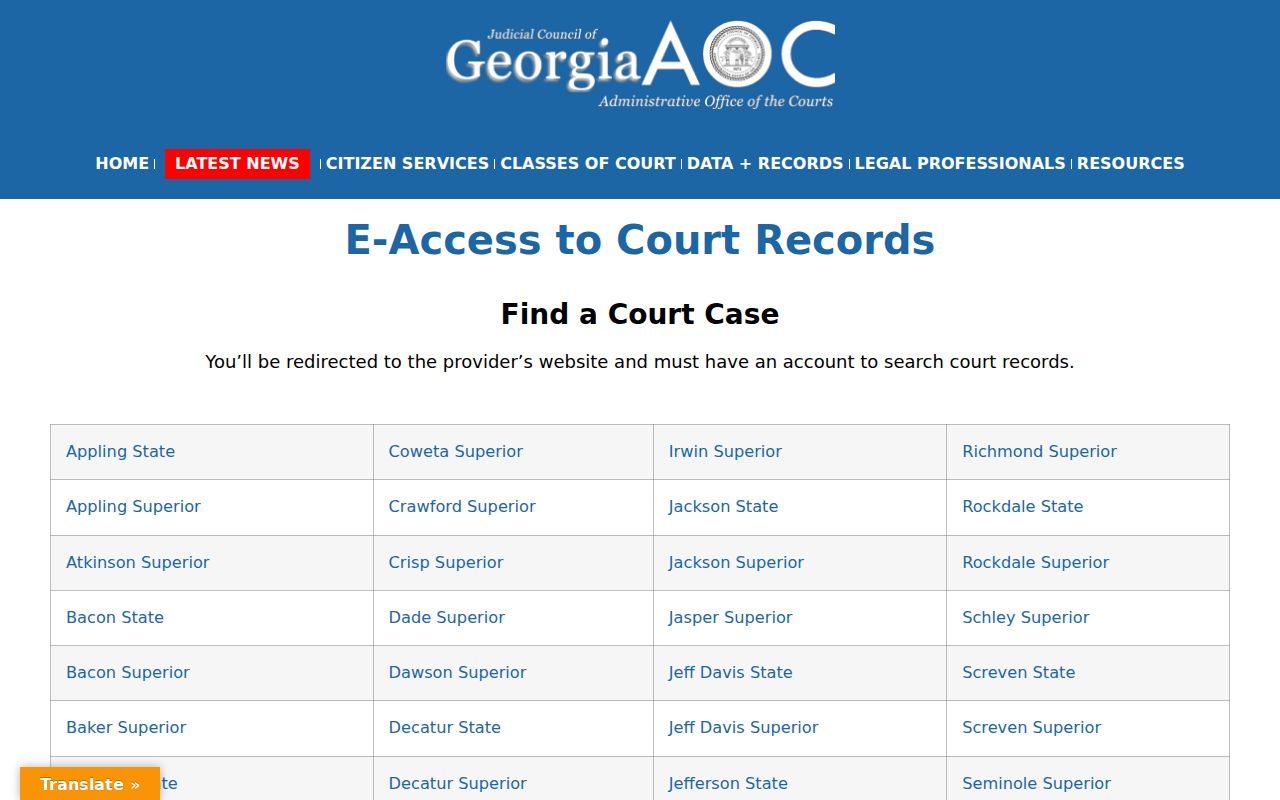
Its Effingham State and Superior listings can help you identify a service. They do not replace the free local CM Web Search index. Nor do they replace the Clerk's original record.
Turn to the statewide page when a provider route is needed. Turn to CM Web Search to check the public State or Superior index. Need a certified judgment, a missing image, or a record whose access is unclear? Contact the Effingham County Clerk. Magistrate, Probate, and confidential Juvenile records sit outside that two-court search.