
How to Search the Springfield Court Docket
Springfield publishes no official party, citation, or case-number search form. So start with the Police and Court Clerk. It handles anything municipal. Do not treat the Effingham County portal as a stand-in for a city ticket. It covers State and Superior Court codes only.
- Read the court name, issuing agency, date, and reference on the notice.
- For Springfield Municipal Court, call the Police and Court Clerk at 912-754-3061.
- Ask whether the matter is still municipal and request the current setting or public record.
- Use an in-person or written city request if the clerk requires it.
- Search Effingham ST or SU only after a county filing or transfer is confirmed.
When you write the clerk, name the municipal court, give an approximate date, include the citation reference, and state the record type and copy format you want. Hold back sensitive identifiers unless the clerk offers an approved channel for them.
Springfield Court Clerk First Route
Springfield lists police and municipal court contacts together on its city materials. The office sits at 130 S. Laurel Street, Springfield, Georgia. The published phone is 912-754-3061. Start there for any Springfield city citation. That number is not the Effingham State Court line. The official Springfield Police and Court Clerk page gives the municipal contact details.
The page shows the clerk inside city administration, which helps you avoid mailing a municipal request to the county clerk just because Springfield is the county seat too.
The Springfield Municipal Court
Springfield Municipal Court covers the city layer: local traffic and ordinance matters within municipal jurisdiction. Official June and July 2026 notices describe a court schedule. It usually holds one session each month. They also document a staffing process for judge, solicitor, and public defender posts. Treat those notices as context. They are not evidence that any case date or judicial assignment shifted. The city clerk can confirm who is serving. The clerk can also tell you where the current session will occur, and whether a notice touches a particular setting. Court staff explain procedure and public record access. They cannot recommend a plea or offer legal advice. A staffing announcement does not cancel a docket. That takes a plain statement from the city or the court.
Springfield Court Docket Staffing Update
In June 2026, Springfield requested applications for Municipal Court judge, solicitor, and public defender. A July notice then extended the public-defender application deadline. Together they show an active staffing process. That makes current sources more reliable than old directory listings. The June 2026 Municipal Court notice lays out the positions and the monthly-session context.
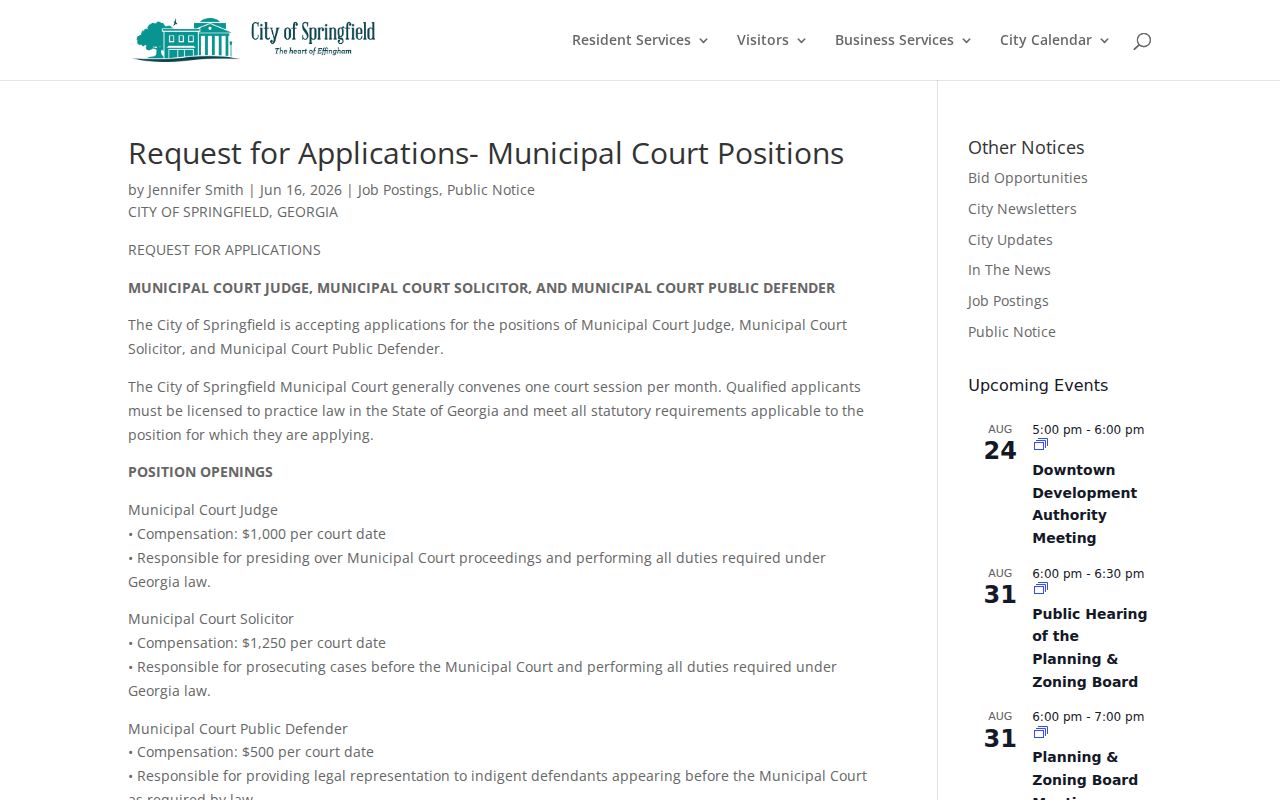
That notice explains administration, but it is no docket calendar and holds no case-specific setting. The July 2026 public-defender extension is the later city update.
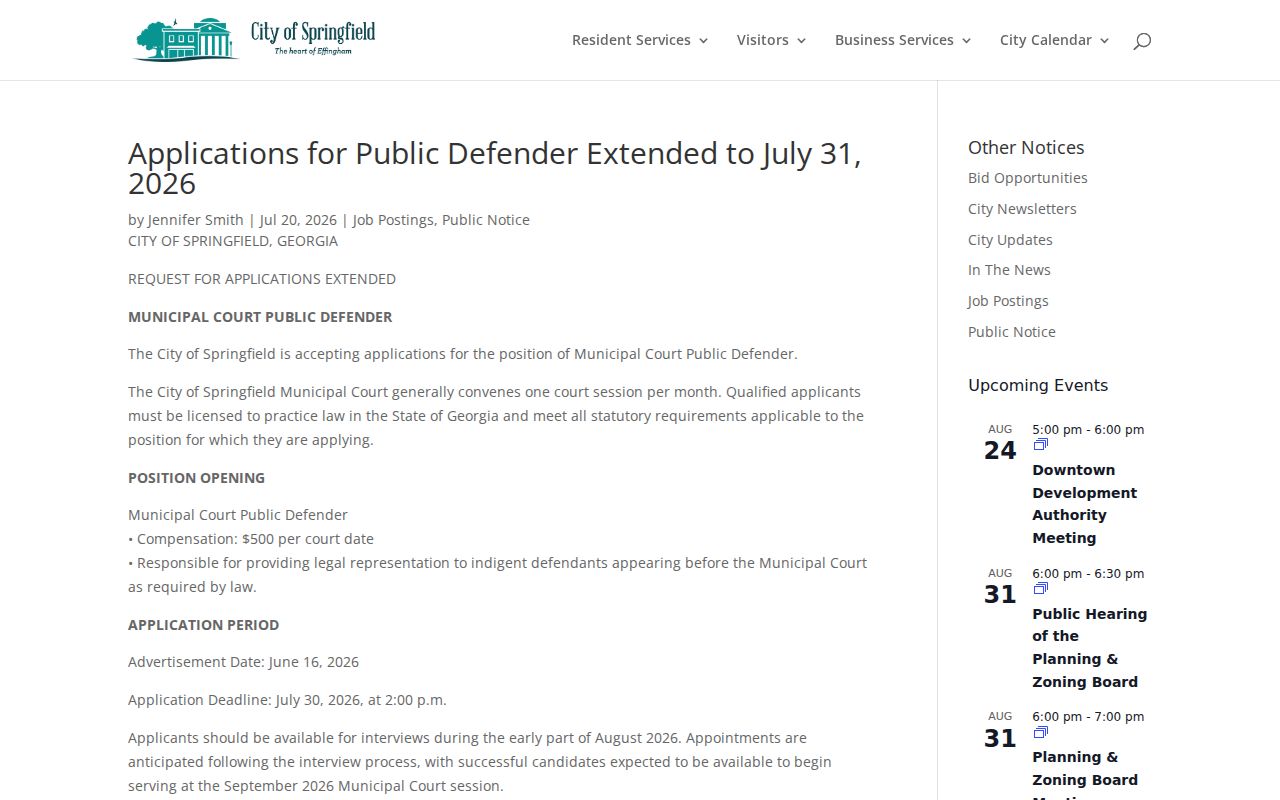
Read the second notice the same way: ask the clerk for present staff and session details rather than assuming anything from a fixed list. Today's answer beats last year's directory entry.
Springfield Court Dates and Settings
Official 2026 notices say Springfield Municipal Court generally meets once per month, but the city posts no public calendar listing complete dates and times. A monthly pattern is not your individual setting. Rely on the citation or notice first. Then confirm with the city clerk before you appear.
| Date | Use the cited setting and obtain current city confirmation. |
|---|---|
| Time | Ask the clerk; monthly frequency alone does not give a time. |
| Location | Confirm the current municipal venue with the city office. |
| Court | Distinguish Springfield Municipal Court from county State Court. |
| Status | Ask whether the setting is current, reset, or otherwise changed. |
If a date gets reset, note who confirmed the new one and when. A reset moves the hearing. It does not dismiss the citation or the charge.
Springfield Monthly Docket Checklist
A once-a-month court schedule raises the cost of a missed assumption. Check the city's latest notices. Keep the original citation handy. Then call close to the setting. That timing catches a change. If no city search form exists, do not assume the court has no record. Ask the clerk to run the search in the city system.
- Confirm the named court and issuing agency.
- Read the current date, time, and appearance language.
- Ask whether staffing or venue updates affect the setting.
- Keep payment receipts and all written notices.
- Confirm a county transfer before using CM Web Search.
Those few steps address the real Springfield access gap. They also keep a general county events calendar from masquerading as an official Municipal Court setting.
Springfield Court Docket Traffic Tickets
A Springfield city ticket belongs with the Police and Court Clerk unless the document or the clerk points elsewhere. The city offers no public citation-search or payment-search fields. A direct call beats a broad portal hunt every time. Ask whether payment is allowed. Ask whether an appearance is required too. Also ask which payment methods are current. In August 2026, the city home page carried a notice about terminating an automated speed-detection-camera agreement. The agreement covered the Springfield Elementary School zone. That notice is policy context. It is not a reason to assume a camera citation vanished or a court date moved. The effective status of any ticket comes from its record and the court. For county-level ticket routes, see the Effingham traffic court records page.
Springfield Speed-Camera Docket Context
A program notice and a court docket answer different questions. The agreement notice concerns city policy. A docket shows what happened in a filed matter. If you hold a speed-camera notice, keep it, contact the listed city office, and ask whether any court record exists and what the current response route is.
Do not assume termination cancels a citation. Confirm the legal effective date and the status of the individual notice with Springfield before missing a deadline.
This line matters most during a transition. A news item or city announcement can be current yet still lack the case-level detail a Springfield court docket search demands.
Where Springfield Cases End Up
Traffic tickets and ordinance cases filed inside Springfield usually stay in the city's own court. Misdemeanors and county-level traffic matters may land in Effingham State Court instead. Felonies and major civil cases belong to Superior Court. For county-level work, the CM Web Search tool reaches both courts, and case numbers carry a ST tag for State Court or a SU tag for Superior Court. No Springfield municipal code appears there. The tool simply does not carry city dockets.
Docket flow: Springfield Municipal Court › Effingham County Courts › Effingham Superior Court
Once the city clerk confirms a transfer, the Effingham County docket becomes the right target. Search it by party name or by the exact case number. If the case stayed put, keep dealing with Springfield. Need help with the county portal's fields? The Effingham County case search page walks through each one in detail.
Springfield County-Seat Court Context
Springfield counted 2,703 residents in the 2020 Census incorporated-place table. Its official plan brands the town the "Heart of Effingham." It also traces the county-seat role through local history. The 1908 courthouse belongs to that setting. The 1935 jail does too. Old buildings and active courts can share one place name, though. That does not mean they share one record system. A county docket lookup will not cover municipal filings here. The official Census TIGER table publishes the population figure itself.
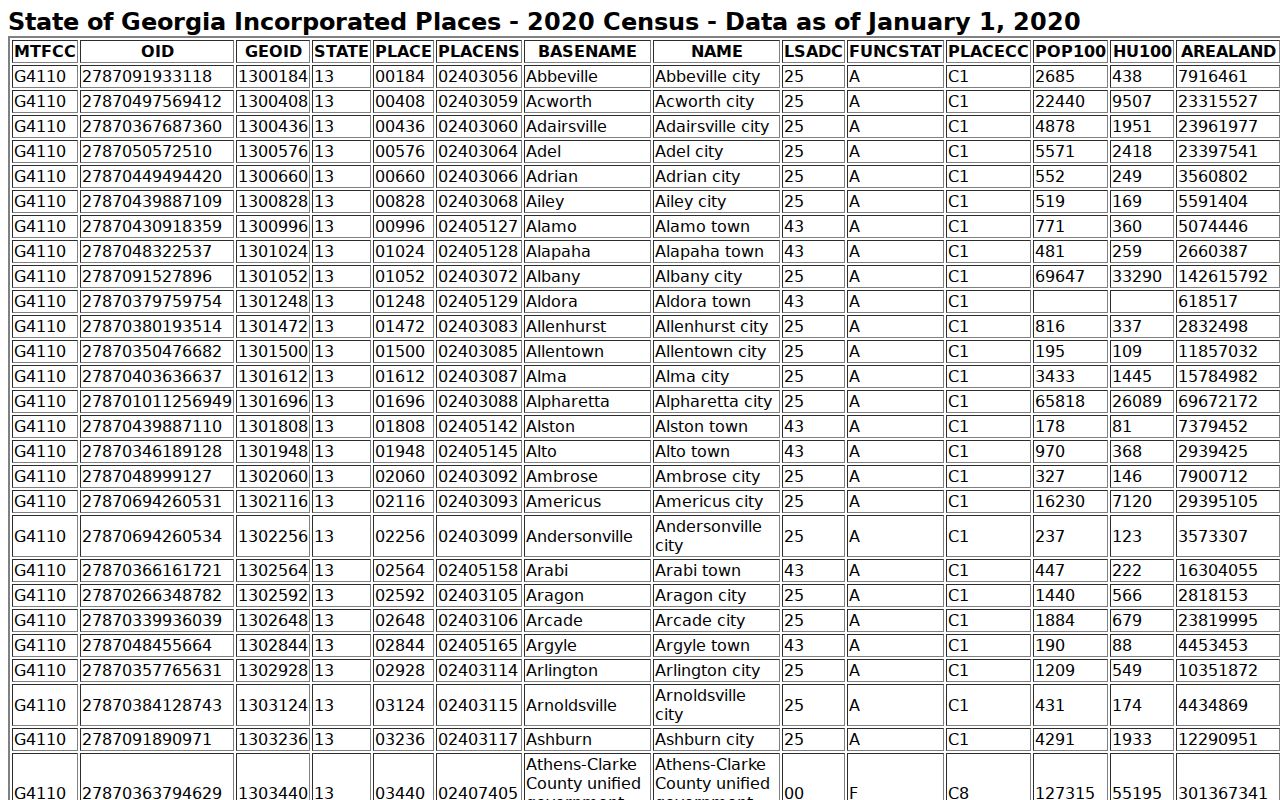
That count puts Springfield second among the county's three incorporated cities. It still does not turn the Municipal Court into a branch of State or Superior Court.
Springfield Historic Court House
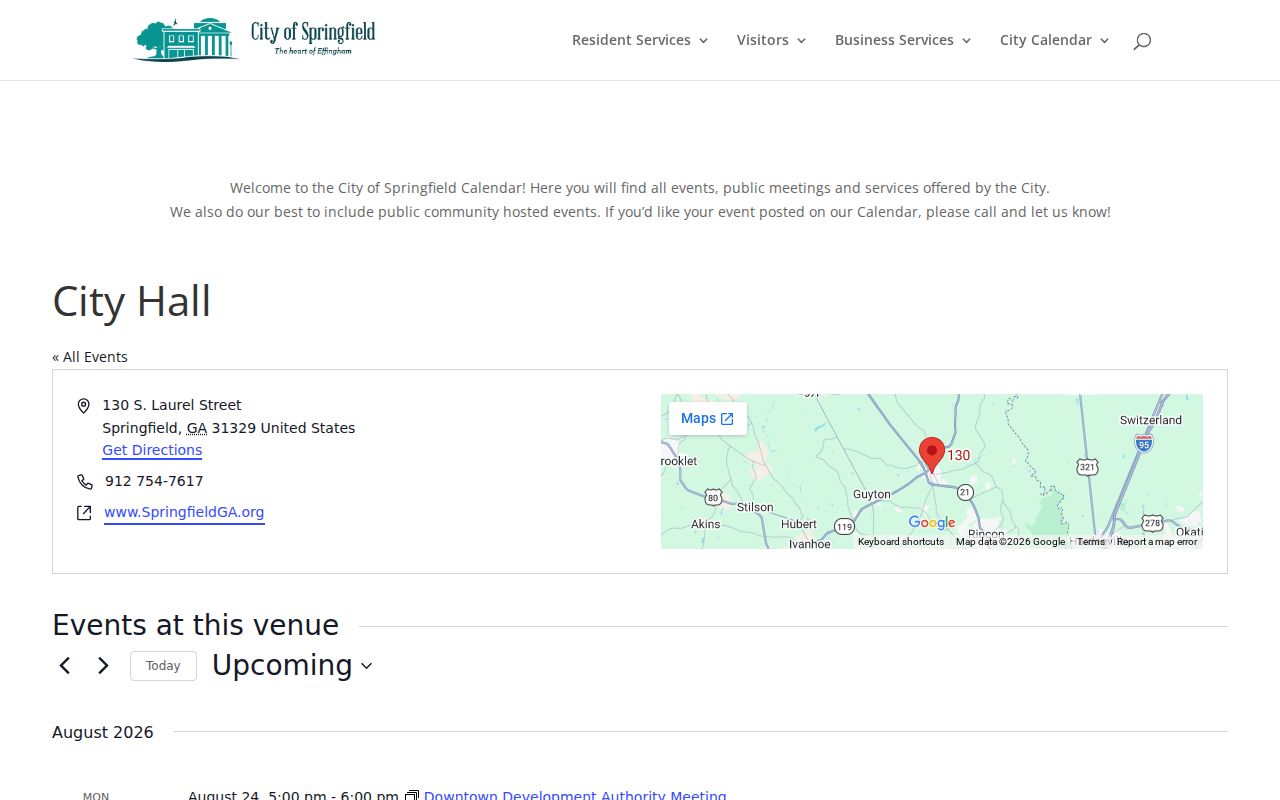
City materials list the Historic Court House venue at 700 N. Pine Street. County court materials point to the same address for the Judicial Complex. The setting is a historic courthouse. One address does not settle who keeps the docket. For city matters, start with the Springfield Police and Court Clerk. That office sits at 130 S. Laurel Street. The Springfield City Hall venue page adds the city-place context.
The old court house sets the civic scene nicely. Still, a docket request has to go to the court named on the citation or the filing, not the building you happen to visit.
Springfield Court Docket Request Options
Call the Police and Court Clerk first. Springfield Municipal Court may need a written request. If so, include the approximate date, the citation reference, the docket entry or document you want, your copy format, and contact details. Ask staff for the current fee. The city posts no official copy or payment schedule. In-person requests may work too, under current city access rules.
Keep city files away from county GovQA and the Effingham Clerk just because both sit in Springfield. State and Superior court records belong with the county clerk. Municipal records belong with the city clerk. If staff hold something back, ask which rule or statute applies. Ask whether a redacted public copy is possible.
Public Access to Springfield Court Records
Georgia opens its court records by degrees. Access turns on the court, the record type, the office holding the file, and any sealing or privacy rule in play. Even a public file shields protected identifiers. Juvenile and sealed files stay closed. Filing something electronically does not make sealed material public. For routing, the Springfield clerk handles a city request while the Effingham clerk takes a county one.
Key rules:
Uniform Superior Court Rule 21 states the public-access baseline and lawful limits for covered court records.
O.C.G.A. § 9-11-7.1 governs protected identifiers in covered filings.
Georgia Rule 616-1-2 addresses electronic filing and access subject to law or order.
The Georgia Open Records process is not a shortcut around court procedure. Take a Springfield municipal request to the city custodian first. Switch routes only after you confirm the case level.